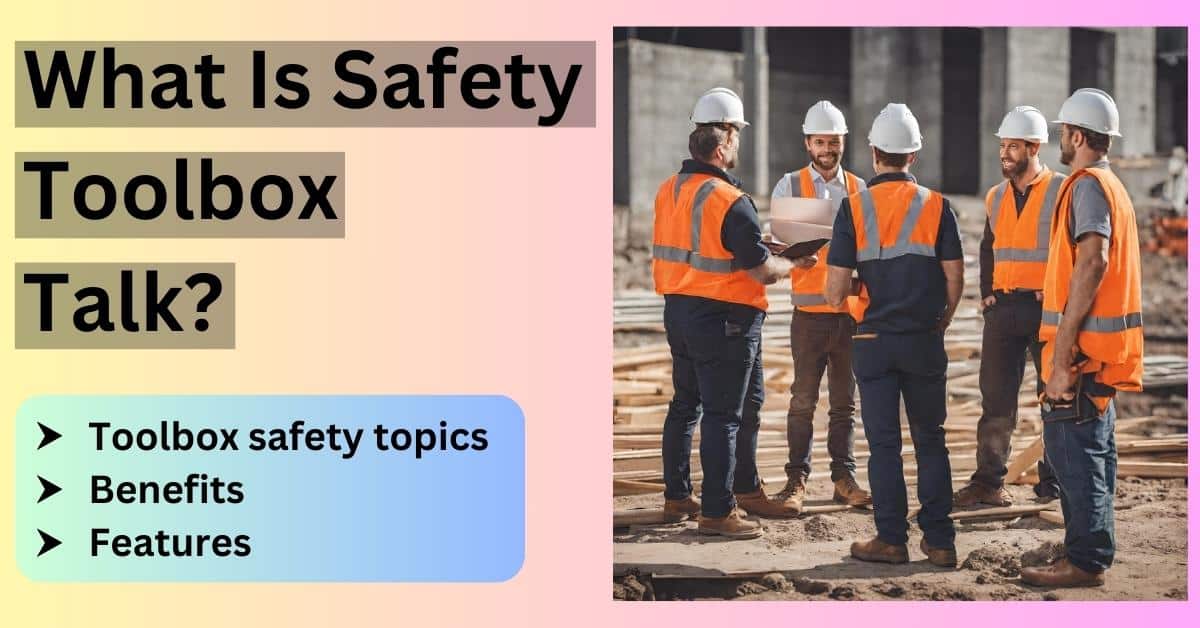
Workers rush to start their shift. Supervisors check off tasks. Equipment fires up. In the chaos, safety can slip—until an incident forces a pause. That’s where toolbox talks change the game. These short, focused safety discussions aren’t just another compliance checkbox. When done right, they reshape awareness, reinforce protocols, and save lives.
Yet too many teams treat them as routine noise: recycled content, disengaged audiences, missed opportunities. The difference between an effective talk and a forgettable one? Relevant, actionable topics tied directly to daily risks.
Here’s how to build a toolbox talk strategy that sticks—with practical topics, real-world examples, and engagement that lasts beyond the huddle.
Why Toolbox Talks Matter Beyond Compliance
Regulations often drive the practice, but the real value is cultural. A 10-minute talk about ladder safety doesn’t just inform—it reveals whether workers understand proper setup, recognize worn rungs, or know lateral movement risks. It surfaces gaps before someone falls.
Consider a crew prepping for roof work. A generic “fall protection” talk might cover harnesses and anchors. A targeted one asks: - Did you inspect the anchor point today? - What if the roof edge shifts under load? - Who’s monitoring for changing wind conditions?
These questions expose assumptions. They prompt team problem-solving, not just passive listening.
Studies show that consistent safety discussions reduce incident rates by up to 40%. But only when topics reflect actual site conditions—not last year’s template.
10 High-Impact Toolbox Talk Topics (With Real Use Cases)
#### 1. Hazard Identification: “What’s Different Today?” Use Case: A paving crew starts work on a new stretch of road. The foreman asks: “What hazards weren’t here yesterday?” Responses reveal: - Excavated trench near the path - Unmarked underground lines - Increased pedestrian traffic due to a nearby event
Action Step: Walk the area. Mark changes. Assign watchers. Update the work plan. Common Mistake: Assuming yesterday’s risks are today’s only risks.
#### 2. Fall Protection Beyond the Harness Use Case: Window installers on a mid-rise project. The team reviews not just PPE, but edge stability, anchor points, and rescue plans. Key Questions: - Can the parapet support a fall load? - Is there a retrieval plan if someone slips? - Are tools tethered to prevent dropped objects?
This shifts focus from “gear on” to “system secure.”
#### 3. Electrical Safety in Wet Conditions Use Case: A storm passes. Work resumes. Instead of jumping into electrical connections, the team discusses: - Ground fault protection status - GFCI tester results - Equipment drying procedures
A recent near-miss involved a frayed cord in a puddle. The talk highlights inspection steps and who’s authorized to tag equipment out.
#### 4. Hand Tool Safety: The Overlooked Risks Use Case: A maintenance team using grinders, hammers, and pry bars. Focus: Proper grip, inspection, and substitution. Example: A worker uses a screwdriver as a chisel—causing tip shatter. The talk reinforces: - Use the right tool for the job - Inspect for chips, cracks, or deformation - Report damaged tools immediately
Include a live inspection demo during the talk.
#### 5. Confined Space Awareness (Even Without Permits) Use Case: Workers entering a utility vault for inspection. It’s not permit-required, but risks exist. Discussion Points: - Air quality checks - Communication method with outside observer - Emergency exit route
Many incidents happen in non-permit spaces because teams assume “it’s quick, so it’s safe.”
#### 6. Heat Stress in Early Season Use Case: Landscaping crews in spring. Temperatures hit 85°F—but workers aren’t acclimatized. Talk Focus: - Hydration before thirst - Recognizing early symptoms (headache, dizziness) - Buddy system checks every 60 minutes
A recent fatality occurred on day two of a heatwave—workers hadn’t adjusted pace or breaks.
#### 7. Noise Exposure and Hearing Protection Use Case: Roadwork with jackhammers and compactors. Engagement Tactic: Play audio clips of safe vs. hazardous noise levels. Key Insight: Hearing loss is gradual. By the time workers notice, damage is permanent. Action: Mandate earplug use in designated zones—even for short tasks.
#### 8. Manual Handling: It’s Not Just Lifting Use Case: Warehouse staff moving materials. Focus: Pushing, pulling, repetitive motions. Example: A worker strains their back not while lifting, but while twisting to place a box. Prevention Tips: - Use mechanical aids when possible - Keep loads close to the body - Avoid twisting at the spine
Demonstrate proper technique with a load.
#### 9. Night Work Visibility Use Case: Crew setting up temporary signage on a highway. Critical Point: Reflective gear isn’t enough. Equipment must have flashing lights. Workers need headlamps. Common Failure: Assuming vehicle drivers see you because you see them. Practice: Do a visibility check—stand 300 feet away and assess detectability.
#### 10. Emergency Response Readiness Use Case: A fabrication shop where a grinder sparks ignite debris. Talk Focus: - Location of fire extinguishers - Who calls 911? - Evacuation route clarity
Test evacuation drills quarterly—but reinforce them weekly with scenario talks.
How to Structure a High-Engagement Toolbox Talk
A great topic fails without delivery. Follow this framework:
1. Start with a Hook (0:00–1:00) Use a recent incident, photo, or direct question: “Who’s seen a near-miss with temporary power setups this week?”
2. Define the Hazard (1:00–3:00) Explain the risk in plain terms. No jargon. “Damaged extension cords can overheat in 90 seconds—even if they still power the tool.”
3. Share a Real Example (3:00–5:00) Detail a close call or incident from your site or industry. “In Texas, a worker tripped over a cord. The tug pulled a saw off the bench—blade hit his leg.”
4. Demonstrate or Inspect (5:00–8:00) Show the right way. Inspect gear. Practice steps. Pass around a damaged cord vs. a good one. Show replacement techniques.
5. Assign Actions (8:00–10:00) End with clear takeaways: - Who checks cords daily? - Where are spare cords stored? - How to report damage?
Document attendance and topics for records.
Common Toolbox Talk Mistakes That Kill Impact
Even seasoned teams slip into bad habits. Avoid these:

- Repeating the Same Topics: Talking about PPE every week breeds indifference. Rotate and drill deeper.
- One-Way Delivery: If workers aren’t speaking, you’re not training—you’re lecturing.
- Ignoring Site-Specific Risks: A talk on silica dust is useless on a landscaping job unless cutting stone.
- Skipping Documentation: No record = no proof of training during audits or claims.
- Holding Talks in Distraction Zones: Noise, moving equipment, or weather disrupt focus. Find a quiet spot.
Fix this: Assign rotating team members to lead talks. Use real photos from your site. Keep logs in a shared binder.
Tools to Streamline Your Toolbox Talk Process
Managing topics, attendance, and tracking manually eats time. These platforms help:
| Tool | Key Feature | Best For |
|---|---|---|
| SafetyCulture (iAuditor) | Pre-built templates, mobile app, analytics | Teams needing audit-ready records |
| Procore Safety | Integrates with project timelines, assignable actions | Construction firms using Procore |
| SiteDocs | Offline access, real-time alerts | Remote or low-connectivity sites |
| Fleetio Perform | Task checklists, photo capture | Maintenance and fleet teams |
| SafetyTek | AI-generated talk suggestions, compliance tracking | High-turnover or multi-site teams |
Choose one that fits your workflow—not just features. If your team resists tech, start with printed logs and photos.
Turning Topics Into Behavior Change
Knowledge doesn’t equal action. Reinforce talks with:
- Follow-Up Walkthroughs: The day after a fall protection talk, observe harness use. Praise correct setup. Correct issues privately.
- Peer Accountability: Assign “safety buddies” to remind each other of talk takeaways.
- Visual Reminders: Post key points near hazard zones—e.g., “Ladder Rule: 1 in 4, Always Tie Off.”
- Monthly Theme Focus: January = Cold Stress, April = Excavation, July = Heat—build depth over time.
One roofing company reduced falls by 60% in two years by tying monthly topics to observed behaviors and incentives.
Final Takeaway: Make It Matter, Not Just Happen
Toolbox talks succeed when they answer one question: “Why should I care today?” Pick topics that reflect real risks. Engage workers as problem-solvers. Follow up with action. Rotate leaders. Document consistently.
A great toolbox talk doesn’t just inform—it interrupts complacency. It turns a routine moment into a safety pivot point.
Start tomorrow: review this week’s incident reports. Pick the most common hazard. Build a 10-minute talk around it. Bring a damaged tool. Ask, “What would you do?” Then watch awareness rise.
Frequently Asked Questions
What are the most common toolbox talk topics? Fall protection, PPE use, hazard reporting, electrical safety, and hand tool inspections top the list—especially in construction and maintenance.
How often should toolbox talks be held? Weekly is standard, but high-risk tasks (e.g., excavation, confined space) warrant pre-task talks regardless of schedule.
Who should lead a toolbox talk? Supervisors usually lead, but rotating team members increases engagement and ownership.
Do toolbox talks need to be documented? Yes. Documentation proves training occurred and supports compliance during OSHA or insurance reviews.
Can toolbox talks reduce accidents? Yes—when topics are relevant and discussions are interactive, studies show measurable reductions in incident rates.
Should toolbox talks be the same across all sites? No. Customize topics to site-specific risks, weather, equipment, and recent near-misses.
How long should a toolbox talk last? Aim for 10 minutes. Long enough to cover key points, short enough to maintain attention.
FAQ
What should you look for in Essential Toolbox Talk Topics for Safer Workplaces? Focus on relevance, practical value, and how well the solution matches real user intent.
Is Essential Toolbox Talk Topics for Safer Workplaces suitable for beginners? That depends on the workflow, but a clear step-by-step approach usually makes it easier to start.
How do you compare options around Essential Toolbox Talk Topics for Safer Workplaces? Compare features, trust signals, limitations, pricing, and ease of implementation.
What mistakes should you avoid? Avoid generic choices, weak validation, and decisions based only on marketing claims.
What is the next best step? Shortlist the most relevant options, validate them quickly, and refine from real-world results.